Listen to this episode of Longevity by Design on Apple Podcasts, Spotify, and YouTube.
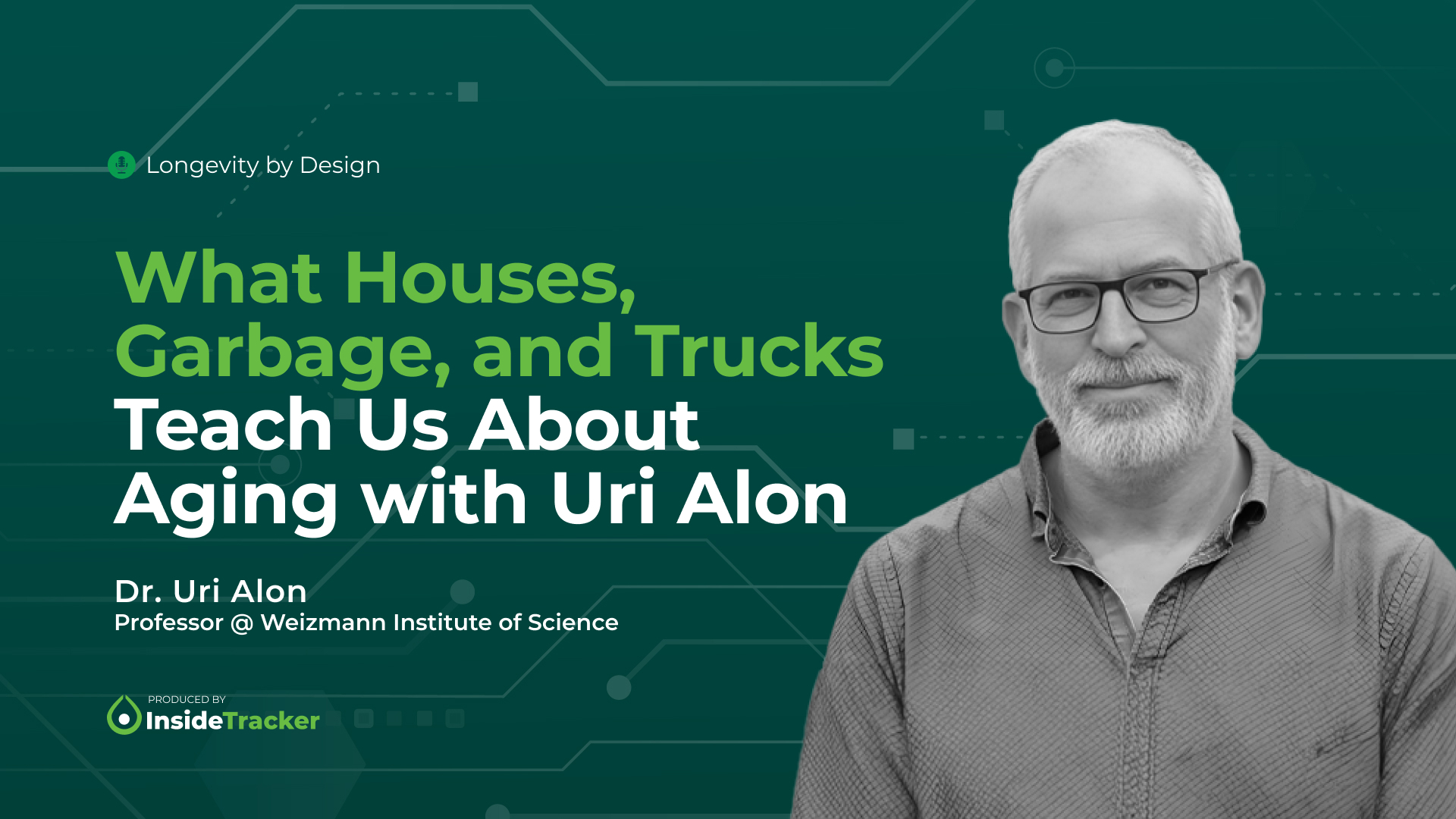
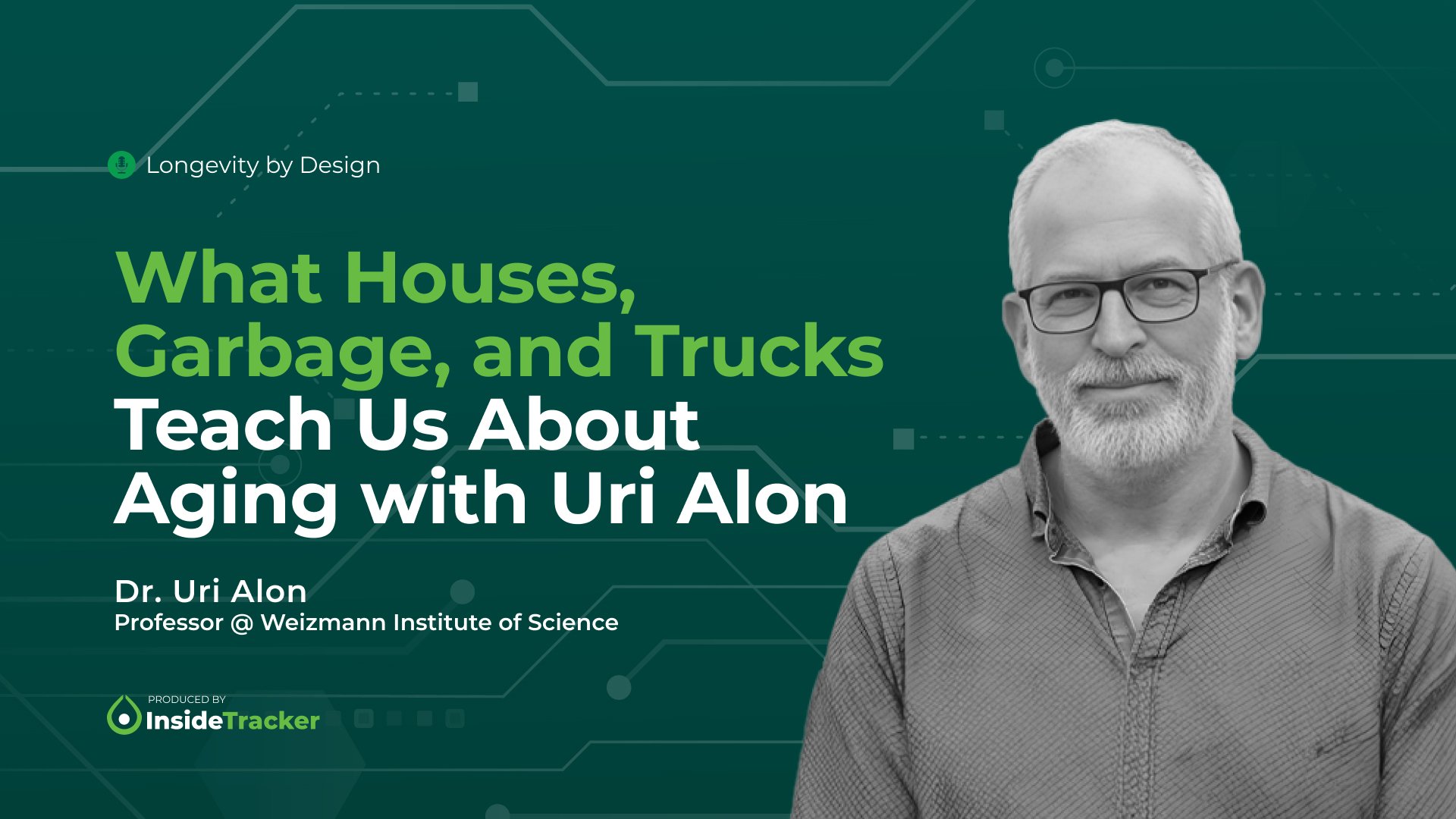
In this episode of Longevity by Design, host Dr. Gil Blander sits down with Dr. Uri Alon, Professor at Weizmann Institute of Science. They explore a systems view of aging that treats longevity as a solvable model, not a grab bag of disconnected theories.
Uri explains aging with a simple story: houses make garbage, trucks remove it, and the village has a threshold for how much damage it can handle. In the body, “garbage” can include damaged and senescent cells, “trucks” can include immune cleanup, and “houses” can include long-lived cells and stem cells that drift over time. The model links this balance to death, disease, and steady decline, and it helps predict which interventions actually change it.
They also revisit the role of genes. Uri argues that lifespan looks closer to 50% heritable today after correcting for early, non-aging deaths in older datasets. The rest comes from environment and biological noise, which regular sleep may help reduce.
💡 Name: Dr. Uri Alon
💡 What they do: Professor of Molecular Cell Biology and systems biology researcher
💡 Company: Weizmann Institute of Science
💡 Noteworthy: He developed the network motifs framework and uses simple models to explain aging as a balance between damage, cleanup capacity, and robustness thresholds.
💡 Where to find him: https://www.linkedin.com/in/urialonw/
Episode highlights:
[00:00:00]: Introduction
[00:01:41]: Transition from Physics to Biology and Systems Thinking
[00:03:06]: Systems Perspective vs. Traditional Biology
[00:03:45]: Theoretical Models and Patterns in Aging
[00:06:29]: Network Motifs and Biological Circuits
[00:10:26]: Applying Systems Biology to Aging and Healthspan
[00:12:27]: The Village Model: Framework for Understanding Aging
[00:19:24]: Interventions: Exercise, Robustness, and Lifespan Limits
[00:22:41]: Multi-level Modeling: From High-Level to Molecular Detail
[00:23:56]: Centenarians, Genetic Variants, and Disease Resistance
[00:25:26]: Menopause, Aging Genes, and Rare Variants
[00:26:57]: Heritability of Lifespan: Revisiting Twin Studies
[00:29:23]: Lifestyle, Genetics, and Diminishing Returns
[00:33:23]: Biological Noise, Environment, and Variability
[00:36:23]: Developmental Stochasticity and Lifespan Differences
[00:38:20]: Future Impact of Medicine on Genetic Influence
[00:40:36]: Polygenic Scores, Planning, and Public Perception
[00:41:25]: Genetic Circuits and Longevity Pathways
[00:44:22]: Epigenetic Reprogramming vs. Senolytics
[00:47:16]: Technological Readiness and Combining Interventions
[00:48:44]: Other Promising Interventions: Rapamycin, Engineering, and Targeted Approaches
[00:51:24]: GLP-1, SGLT2 Inhibitors, and Robustness
[00:53:01]: Vascular Health, Immune Function, and Lifespan Extension
[00:56:28]: Quick Fire Round: Myths, Principles, and Predictors
[00:59:04]: Key Takeaways: Systems View and the Equation of Aging
[01:02:07]: Closing Remarks and Farewell
For science-backed ways to live a healthier, longer life, download InsideTracker's Top 5 biomarkers for longevity eBook at insidetracker.com/podcast